What a VBHC contract needs
A hospital may know that a patient has been discharged after a heart attack, but not whether they started rehabilitation, whether they were readmitted elsewhere or whether they are managing daily activities again. These are practical questions for value-based healthcare (VBHC), which considers the outcomes that matter to patients alongside the resources used to achieve them. Linking payment to those outcomes requires a proven way to answer them.
At ESC Congress 2026 in Munich, EuroHeartPath Work Packages 2 and 3 presented six posters from a wider programme of cardiovascular pathway mapping. Two studies, developed by Vintura colleagues with UMC Utrecht, the German Heart Center Munich and other consortium partners, examined the measurement, data and organisational capabilities on which VBHC depends. Both analyses included 118 participating centres across 15 European countries.1,2

Before linking payment to outcomes, teams need to know what happened to patients, where care fell short and who can act on the findings.
What EuroHeartPath has built in its first year
EuroHeartPath is a five-year Innovative Health Initiative collaboration involving 35 partners from healthcare, academia, public health, patient organisations and industry. Alongside its work on care pathways, the programme includes 18 pathfinder studies in artificial intelligence, digital health, point-of-care testing and robotics.3,4
Within Work Packages 2 and 3, we are examining how care is organised across 15 countries for coronary artery disease, heart failure, cardiac amyloidosis and out-of-hospital cardiac arrest. We want to establish where patients encounter delays or gaps, which services have found workable solutions and what another hospital would need to adopt them.
Since the project kicked off in June 2025, the EHP WP2/3 team, led by Vintura, has:
- Developed four European reference pathways. One for each condition, these provide a common structure for comparing diagnosis, treatment, referral and follow-up across countries.
- Designed and conducted a survey across 15 countries. Developed with clinical partners, it produced a consolidated dataset covering 119 centres and organisations, on which this analysis is based.
- Compared clinicians’ responses with national evidence. Guidelines, official pathways, registries, audits and published studies help us distinguish what is recommended, what clinicians report and what other data show about care delivery.
- Developed 60 draft country-specific pathway maps. Covering 15 countries and four conditions, the drafts set out the professionals involved, referral points, diagnostics, treatments and available information on timing, with gaps and promising practices flagged for expert review.
Finding 1: the basic capabilities rarely come together
The first poster asked whether centres used an internal evaluation methodology aligned with VBHC, and whether they also reported quality-of-life measurement and infrastructure for sharing data between centres. Multiple responses from the same centre were consolidated, with each centre given equal weight.1
On this basis, reported availability of a VBHC evaluation framework was 14.0%. The estimate fell to 4.8% when quality-of-life measurement was also required, and to 2.4% when between-centre data sharing was added. This was a deliberately limited three-part definition of readiness, rather than a comprehensive assessment of VBHC. The figures are centre-weighted estimates, not simple counts of centres classified as ready or unready.
Country-level summaries of the participating centres all remained below 50% for the evaluation framework. The poster also found no clear advantage for centres in countries classified as having established national VBHC programmes. These are findings about the sample; they do not establish how widely VBHC is used nationally.
Individual capabilities were more common: reported data sharing and cross-institutional linkage were each around 50%. The difficulty was bringing the relevant capabilities together. A registry, for example, may record clinical events without showing how patients feel or function. A quality-of-life questionnaire may be collected without its answers reaching the team responsible for follow-up. These examples illustrate why having a data source and using it to improve care are separate tasks.
A recent national audit makes the measurement problem tangible. NICOR’s 2026 interim National Heart Failure Audit, including data to September 2025, shows that reported prescribing rates change depending on whether records marked “unknown” are included in the denominator. It calls for better data quality.5 For a hospital comparing performance, the practical implication is straightforward: it needs to distinguish a gap in care from a gap in recording before deciding what to change.
Finding 2: the largest infrastructure gaps concern data and coordination
The second poster combined ten organisational items into an Infrastructure Readiness Score, covering pathways, registries, standard operating procedures, collaboration, evaluation and digital capabilities. In the participating sample, average scores were 72.8% for the Nordic and Baltic group, 48.2% for Western Europe, 47.2% for Southern Europe and 34.5% for Eastern Europe. The difference between the highest and lowest regional averages was 38.3 percentage points.2
The individual items help explain what that difference looks like in practice. Compared with the rest of the sample, the Nordic and Baltic group had higher reporting rates for data linkage (88% versus 38%), regional digital platforms (79% versus 34%) and national registries (92% versus 51%). Standard operating procedures were reported at 75% in both groups. Other clinical-practice items showed smaller or mixed differences.
These findings point to specific questions for hospitals and health systems: can services link their records, use shared platforms and contribute to registries? A written protocol alone cannot answer them. Nor can national income: the country-level analysis did not detect a clear association between the score and GDP per capita (R² = 0.05; p = 0.40). With only 15 countries, this should not be read as evidence that resources do not matter. It supports checking the capabilities of participating services directly.
Download the ESC Congress 2026 posters
Both EuroHeartPath posters are available as PDFs.
Poster 1: VBHC evaluation frameworks in European cardiology
Europe’s Value-Based Healthcare Blind Spot in Cardiology: Near-Zero Clinical Penetration of VBHC Evaluation Frameworks Across 15 Countries. Tjon L, Gallego-Llorente M, Rekker LY, et al.
Poster 2: the Infrastructure Readiness Score
A composite infrastructure readiness score reveals an approximately 40-percentage-point divide between different cardiology systems in Europe: a multinational cross-sectional survey. Gallego-Llorente M, Rekker LY, Kieviet LC, et al.
Where hospitals and their partners should start

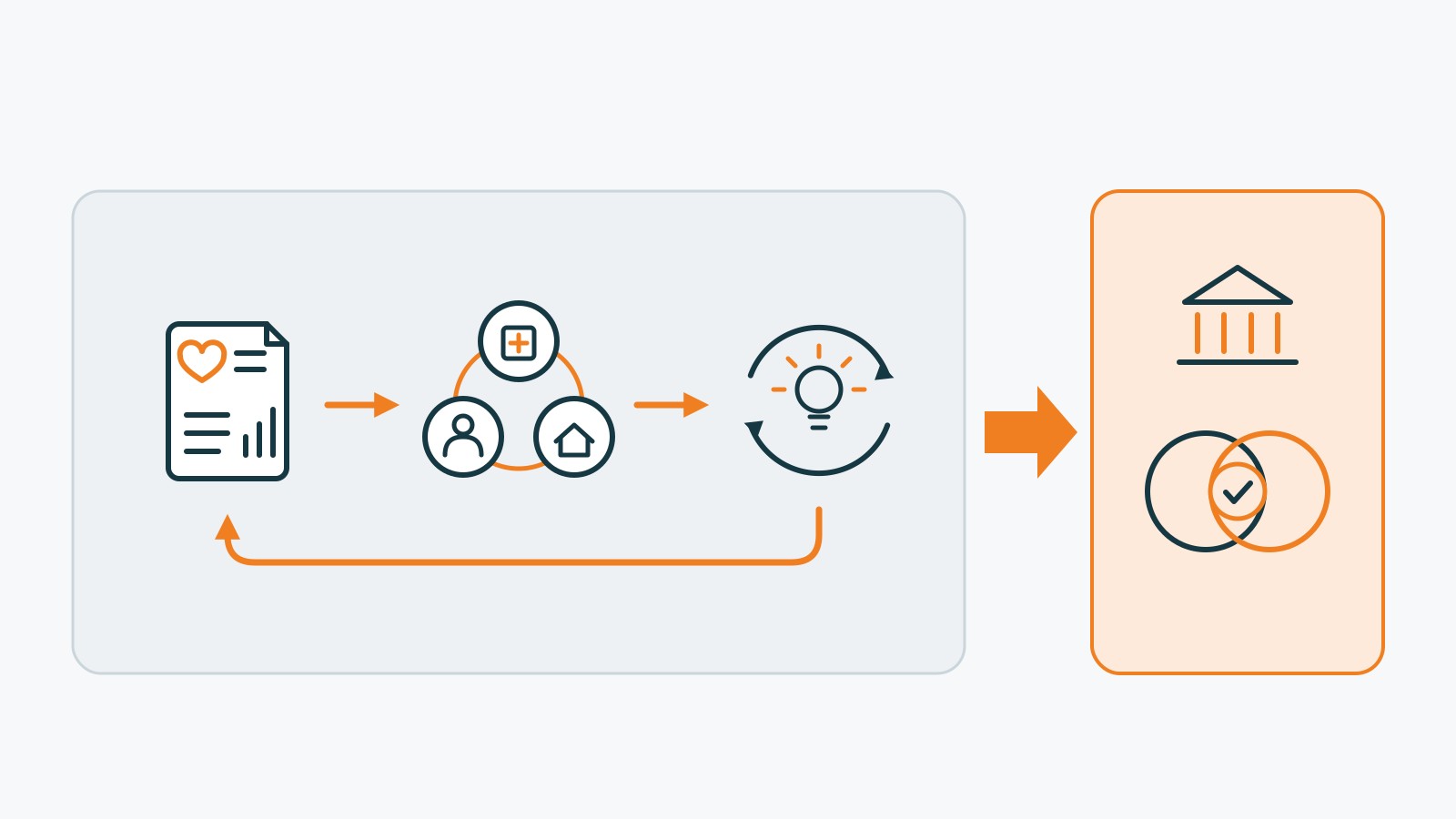
Our recommendation is to build three capabilities under hospital leadership, with support from the organisations around them, and use those capabilities to develop workable payment arrangements. Clinical teams need time and responsibility for this work. Data specialists, patient organisations, peer hospitals and regional bodies can help with measure selection, reporting systems, workflow changes and agreements between providers.
1. Decide what to measure and who will collect it
Choose a manageable set of clinical outcomes and validated patient-reported measures with clinicians and patients. For heart failure, this could include readmissions alongside a measure of symptoms and daily functioning. Agree the patient group, collection points, responsible staff and where results will appear. Record resource use as well, so that teams can assess the effort and cost of delivering care.
Check whether the information is already available before adding another form. Where new collection is needed, build it into an existing appointment or follow-up contact and provide a way for patients who cannot use digital questionnaires to respond.
2. Connect information across services
Teams need to follow outcomes and care across primary care, hospitals, rehabilitation and community services. For a rehabilitation referral, they need to know whether it was received, whether an appointment was offered and whether the patient attended. Agree which service records each step, how the information is exchanged and who follows up when it is missing. Shared definitions, access permissions and data-sharing arrangements need to support this everyday work.
Hospitals can draw on existing European work. In January 2025, EuroHeart became an established activity within the ESC’s Data Science programme. This separate initiative provides common data definitions for conditions including acute coronary syndromes and heart failure, supporting comparable registry data and quality reporting.6 Reusing such definitions gives teams a starting point when agreeing what their systems need to exchange.
3. Give teams a routine for acting on the results
Bring the people responsible for a pathway together to review the same information. If rehabilitation attendance is low, examine where patients are lost: referral, booking or attendance. Test a specific change, such as booking the first appointment before discharge or confirming receipt of the referral, and review the results after an agreed period. These are examples to assess locally, not interventions tested by these two posters.
Peer hospitals can help by sharing the details that a headline result leaves out: staffing, booking rules, patient contact, data requirements and how the service is funded. For a first local project, choose one patient group and one problem, name a clinical lead and a data lead, establish a baseline and set a review date. This gives the team a defined piece of work and a way to judge progress.
Then: align payment with care that teams can measure and deliver
Involve payers early to agree relevant outcomes, evidence requirements and funding for the work. As measurement and coordination become reliable, payment arrangements can support the improved pathway, including the follow-up and coordination needed across providers. Any link to outcomes should account for patient differences, resource use and which organisations can reasonably influence the result. Reliable measurement makes that discussion more credible; it does not remove the need to negotiate responsibilities and funding.
The next phase: establish what other hospitals can use
EuroHeartPath’s next task is to investigate the bottlenecks and promising practices in more depth. For each practice, the questions are concrete: who does the work, which patients are eligible, what information is needed, how is it funded and what evidence suggests it helps? Local experts will also need to explain the conditions that could make the same approach difficult elsewhere.
Those findings will feed into implementation guides and a future inter-hospital learning network, supported by shared tools and access to pathway evidence. A hospital should be able to identify a relevant peer, understand how its service works and judge what it would need to adapt. That is the practical contribution we want these maps to make.
For hospitals pursuing value-based cardiovascular care, a useful first investment may be protected staff time, a dependable outcome report or a reliable handover between services. Establishing these capabilities gives clinicians, managers and payers a firmer basis for deciding what to change and how to fund it.
Take action for your hospital or healthcare system
We welcome conversations with hospitals, health systems, professional societies and partners interested in reviewing the pathway maps or sharing a practice that has improved a specific part of care. The most useful examples explain who did what, what resources were needed and what another centre would have to adapt.
To start a conversation, contact Marcos Gallego-Llorente at mgallego@vintura.com.
Frequently asked questions
What does “VBHC readiness” mean in the EuroHeartPath study?
In the first EuroHeartPath poster, minimal VBHC readiness was defined as the combination of three conditions in the same centre: a value-based healthcare evaluation framework, any quality-of-life measurement and infrastructure for sharing data between centres. It is a deliberately limited definition, not a comprehensive assessment of value-based healthcare.
How many European cardiology centres are ready for value-based healthcare?
Across 118 participating cardiology centres in 15 European countries, 14.0% reported a VBHC evaluation framework. The centre-weighted estimate fell to 4.8% when quality-of-life measurement was also required, and to 2.4% when between-centre data sharing was added. In no country did the participating centres reach 50% adoption. These figures describe the sample, not national prevalence.
What is the Infrastructure Readiness Score?
The Infrastructure Readiness Score combines ten organisational items, covering pathways, registries, standard operating procedures, collaboration, evaluation and digital capabilities. Average scores were 72.8% in the Nordic and Baltic group, 48.2% in Western Europe, 47.2% in Southern Europe and 34.5% in Eastern Europe: a gap of 38.3 percentage points. The largest differences concerned data linkage, regional digital platforms and national registries, while standard operating procedures were reported at 75% in both groups compared.
Does national wealth predict readiness for value-based cardiovascular care?
The country-level analysis did not detect a clear association between the Infrastructure Readiness Score and GDP per capita (R² = 0.05; p = 0.40). With only 15 countries, this does not show that resources are irrelevant, but it supports assessing the capabilities of individual services directly rather than inferring them from national income.
What is EuroHeartPath?
EuroHeartPath is a five-year Innovative Health Initiative collaboration of 35 partners from healthcare, academia, public health, patient organisations and industry, running from February 2025 to January 2030 under grant agreement 101194785. Within Work Packages 2 and 3, led by Vintura, the consortium maps care pathways for coronary artery disease, heart failure, cardiac amyloidosis and out-of-hospital cardiac arrest across 15 European countries.
About the evidence
The two posters report descriptive analyses of a cross-sectional, self-reported survey of cardiologists at participating European centres. Responses were first averaged within each centre, then combined with equal weight given to each centre. The analyses do not establish causal effects on patient outcomes. The practical recommendations above are our interpretation of the findings.
Sources
- Tjon L, Gallego-Llorente M, Rekker LY, et al. Europe’s Value-Based Healthcare Blind Spot in Cardiology: Near-Zero Clinical Penetration of VBHC Evaluation Frameworks Across 15 Countries. Poster presented at ESC Congress 2026, Munich. Download the poster (PDF)
- Gallego-Llorente M, Rekker LY, Kieviet LC, et al. A composite infrastructure readiness score reveals an approximately 40-percentage-point divide between different cardiology systems in Europe: a multinational cross-sectional survey. Poster presented at ESC Congress 2026, Munich. Download the poster (PDF)
- European Society of Cardiology. EuroHeartPath project launched to transform cardiovascular care across Europe. 16 June 2025.
- European Commission CORDIS. EuroHeartPath project factsheet. Grant agreement 101194785; February 2025 to January 2030.
- NICOR. National Heart Failure Audit: Interim Report 2026. Including data to 30 September 2025; see “Data quality in drug prescribing in HFrEF”.
- European Society of Cardiology. EuroHeart Project Development and Data Standards. See “Realisation phase” and “EuroHeart Data Standards”.
More about the programme: EuroHeartPath project website.
Funding acknowledgement
This project is supported by the Innovative Health Initiative Joint Undertaking (IHI JU) under grant agreement No 101194785. The JU receives support from the European Union’s Horizon Europe research and innovation programme and COCIR, EFPIA, EuropaBio, MedTech Europe and Vaccines Europe.
Views and opinions expressed are those of the authors only and do not necessarily reflect those of the aforementioned parties. Neither of the aforementioned parties can be held responsible for them.